
The following is an interview with industry experts. Growers Network does not endorse nor evaluate the claims of our interviewees, nor do they influence our editorial process. We thank our interviewees for their time and effort so we can continue our exclusive Growers Spotlight service.
To skip to any section within this article, click the links below:
Abbreviated Article
Editor’s Note: Growers Network appreciates its readers! If you are limited on time, we are now offering abbreviated versions of our articles. Click below to view.
5-Minute Snapshot
Grow Operation
Where are you located and why?
We grow in North Las Vegas, in a former ice-cream manufacturing plant. The facility was built with 3 medical-grade, sealed freezer rooms which are perfect for growing in a confined, environmentally-controlled space. We added HVAC, dehumidification, powers, generators, and more, and started the grow.
Indoor/Outdoor/Greenhouse and why?
Our grow is indoors, and our medical license is intended solely for an indoor grow. Nevada is a “no-see” state, meaning that if you can tell what is being grown from the outside, the state will take away your license.
What does your grow layout look like?
We have a 5000 sq. ft building divided into 3 – 20’ x 40’ rooms that are double-stacked. We run a perpetual harvest, sea of green system, and we’re able to pull out roughly 2 ½ pounds of cannabis a day.
What’s your approach to pest management?
Three things are a critical function when it comes to pest management:
- Prevention
- Cleanliness
- Management
Prevention is is focused on Integrated Pest Management. People have been growing crops forever, and we’ve only truly cultivated cannabis relatively recently. Instead of repeating old mistakes, learn from other people’s experiences. If you ever have a concern about a specific pest in your area, check in with the local department of agriculture and learn what you can. Cleanliness is all about making sure nothing enters the grow room that you don’t want in there in the first place. Ideally, everything, including your employees, should run through some form of cleanliness procedure, and your air and water should be sterilized. And of course, management is about staying on top of what’s going on in your grow. If you have an infestation of some pest, they appeared because you weren’t keeping a close eye on things. Pests don’t appear out of nowhere. As I always say to my new employees, “the opposite of pests is persistence.”
Plants and Equipment
You mentioned that you skip veg, how does that work?
We grow large clones. Once they’re well-rooted, we transplant them into trays where they’re completely rootbound. By keeping the clones rootbound, the plant realizes that it’s confined and quickly pushes towards flowering.
How do you give your clones enough time to root?
We’ve built an aeroponic dome system that gives the clones plenty of time to root. A tray with holes for the rooting medium has aeroponic sprayers on the bottom so that the clones stay nice and humid while their roots grow.
How many plants are you growing and how do you grow them?
We’re growing 6,000 plants in our 5,000 square feet of growing space. We grow small plants and we’re double-stacked. Nevada is not a plant-counting state. It doesn’t matter how high your plant count is, so training isn’t a big concern.
What strains are you growing?
We grow:
- Grape Ape
- Grape Stomper
- Lemon Larry
- Blue Dream (a few varieties, since there’s no one definitive Blue Dream)
- Cherry Diesel
- And more depending on their sales value and usefulness.
What is your current feeding style?
Adult plants get drip-fed via a drain-to-recycling system. The way it works is like this:
- We take in municipal water or recycled water and run that water through an RO system.
- Check the pH and EC, adjust appropriately.
- Add in nutrient mix.
- Drip-feed the plants.
- Extra water drains back to the RO system.
- We also recycle transpired water via our dehumidifiers.
About the Company
What makes TFO unique?
TFO is a grow that has been challenged by competing interests in its management. The grow itself is technically sound and well-designed, but the management team didn’t understand growing, and the profit model wasn’t based on a full understanding of how cannabis is grown or sold in the medical cannabis community. I have worked diligently to help turn that around and make it a successful grow using mathematics and meticulous note-taking.
Any advice for new commercial growers?
First, figure out what you know and what you don’t know. It’s ok to not know everything. That’s what books and reading are for. Second, take plenty of notes. My notetaking allows me to develop best practices over time that I can share with my employees, which we can turn into procedures for new hires. I need to make new mistakes, not repeat old mistakes. Third, when you’re setting up a business, make sure that you have aligned your priorities with your partners. Everybody has different needs from a business venture, and relationships require compromise. Fourth, don’t start a business if you don’t have the passion for it. Money may be important, but you can always make more money tomorrow. Spend your time in good health and in joy.
If you like the abbreviated article, let us know in the survey at the bottom of the article! We’re always interested in hearing your feedback. If you want to read more, you can read the full article below.
The Grow Operation
The opposite of pests is persistence.— Kurtis Johnson
Where are you located and why did you choose that location?
Indoor/Outdoor/Greenhouse and why?
What does your grow layout look like?
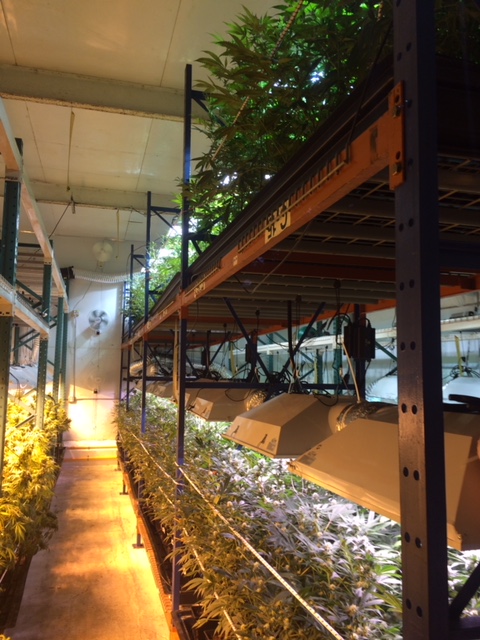
What’s your approach to pest management?
- Prevention
- Cleanliness
- Management
Now, what do I mean by these three things? Prevention is is focused on Integrated Pest Management. I’m a state-certified pesticide applicator and pest manager through our state’s department of agriculture. The honest truth is that people have been growing crops forever, and we’ve only truly cultivated cannabis relatively recently. Instead of repeating old mistakes, learn from other people’s experiences. Departments of agriculture for most states have tons of resources for how to effectively manage and prevent different local pests without the need for dangerous chemicals. If you ever have a concern about a specific pest in your area, check in with the local department of agriculture and learn what you can.
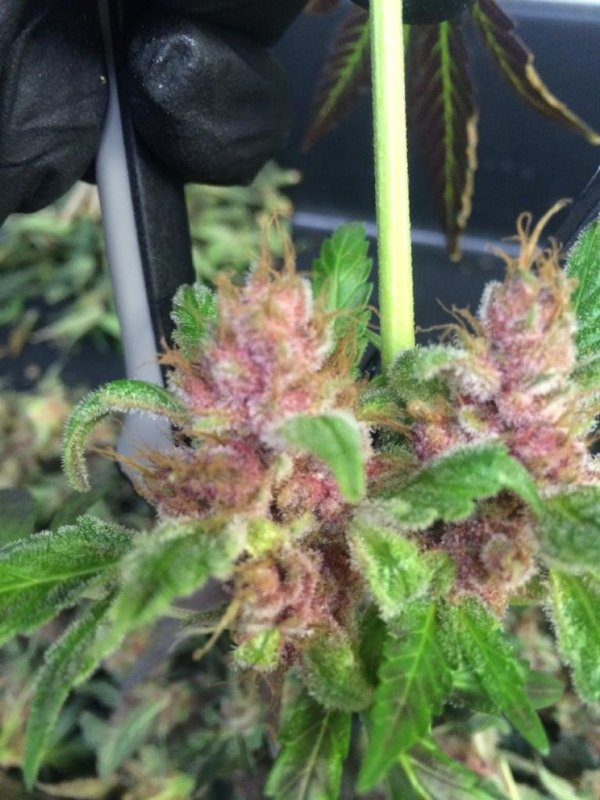 Some of the TFO bud.
Cleanliness is all about making sure nothing enters the grow room that you don’t want in there in the first place. Ideally, everything, including your employees, should run through some form of cleanliness procedure, and your air and water should be sterilized. Air should be passed through carbon filters, subjected to ozone and UV sterilization. Water should be passed through an RO machine and then checked for EC and pH before adding nutrients. And of course, management is about staying on top of what’s going on in your grow. What I mean is this: If you have an infestation of some pest, be it algae, fungus gnats, flies, etc., they appeared because you weren’t keeping a close eye on things. Pests don’t appear out of nowhere. They form over time, and if you aren’t on top of it, you’re going to have a problem. As I always say to my new employees, “the opposite of pests is persistence.” In our grow, we assign an individual with the task of being emphatically responsible for pest monitoring. If there’s a sign of anything whatsoever, we want to know about it.
Tell me about the extracts you make.
What challenges have you faced in the past?
What are your current challenges?
Plants and Equipment
[…] If I’m not smoking regularly, I need something to do.— Kurtis Johnson
You mentioned that you skip veg, how does that work?
How do you give your clones enough time to root?
How many plants are you growing and how do you grow them?
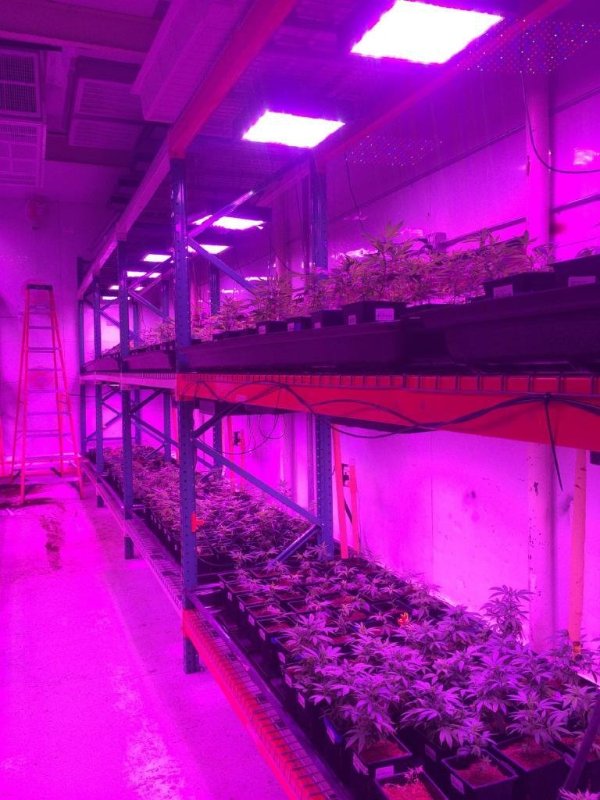
Now, the nice thing about Nevada is that it’s not a plant-counting state. It doesn’t matter how high your plant count is, so training isn’t a big concern. In states where plant counts do matter, training is vital. But not so much here.
What strains are you growing?
- Grape Ape
- Grape Stomper
- Lemon Larry
- Blue Dream (a few varieties, since there’s no one definitive Blue Dream)
- Cherry Diesel
Until somebody establishes a genetic profile, strains aren’t the most important thing in my book. We pick based on what sells well and phenos well. Cherry Diesel is a production wonder, for example. Part of the science of being a good cultivator is identifying those strains that work and sell well.
What is your current feeding style?
- We take in municipal water or recycled water from the grow or dehumidifiers.
- Run that water through an RO system.
- Check the pH and EC, adjust appropriately.
- Add in our nutrient mix to the water via an automatic timer and a pre-mixed tote of nutrients.
- Fertigate the plants with a drip-feed system.
- Any extra water drains back to the RO system.
- Additionally, we also recycle transpired water via our dehumidifiers, which is a great source for relatively clean water as well.
What lights are you using and how do you place them?
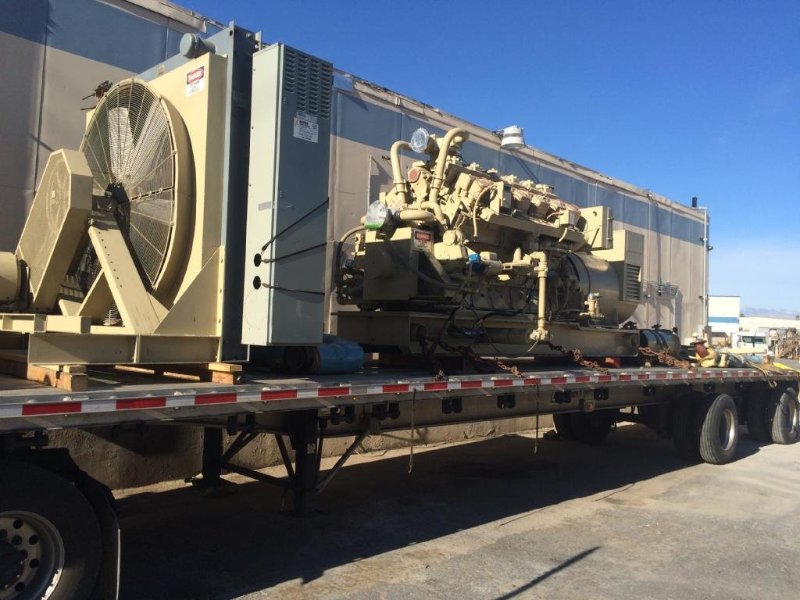 A new generator shipped to the facility.
Do you make your own nutrients or buy them?
What are your preferred environmental conditions?
About Kurtis Johnson and TFO LLC
I need to make new mistakes, not repeat old mistakes.— Kurtis Johnson
What is your background?
Why did you start growing?
Tell us about your company. What makes it unique?
What has been your biggest success?
What is your long term goal?
Any advice for new commercial growers?
Any recommended reading?
How should people reach you if they want your consulting?
 Do you want to receive the next Grower’s Spotlight as soon as it’s available? Sign up below!
Want to get in touch with TFO LLC? You can reach them via the following methods:
- Phone: 702-480-7676
- Email: kurtiswj@gmail.com