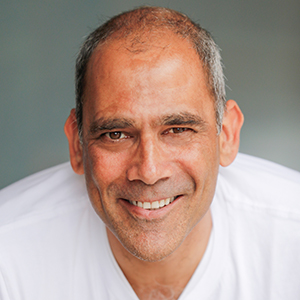
The following is an interview with industry experts. Growers Network does not endorse nor evaluate the claims of our interviewees, nor do they influence our editorial process. We thank our interviewees for their time and effort so we can continue our exclusive Growers Spotlight service.
To skip to any section within this article, click the links below:
Abbreviated Article
Editor’s Note: Growers Network appreciates its readers! If you are limited on time, we are now offering abbreviated versions of our articles. Click below to view.
5-Minute Snapshot
Delivering a More Intelligent Product
Canndescent has a slick marketing presence. How did you create that?
There’s no marketing “trick” out there that guarantees that you will sell well or be received well. Instead you need to have a solid business plan. Let me break it down for you:
- Identify problems in the industry that need solving.
For investors to invest in you, they need to know that you’re solving a real problem for consumers.
- Determine realistic solutions to the problems you identified.
Your solutions need to focus on what is realistically achievable with a limited budget.
What problems did Canndescent identify in the industry?
There were a number of problems we identified in the market, so I’ll list them off:
- Not much high-quality product is available on the market.
- The supply of cannabis is incredibly inconsistent and periodic.
- Cannabis is very intimidating and confusing for new consumers.
- Much of the current branding and marketing is too counterculture and misogynistic to achieve a wide market.
- Toxic products and opaque production practices are inherently anti-consumer.
In short, we found that the market was inconsistently producing average quality cannabis that was sold in confusing and intimidating ways to customers unaware of the potential risks behind the product.
How did Canndescent solve those problems?
We worked backwards from the problems we identified. Since we wanted to produce top tier, simple, and healthy products on a consistent basis, we focused on the best ways to do that. Here’s what we came up with:
- Provide our own, top-shelf cannabis to the California market, with as few pesticides involved in production as possible.
- Do away with countercultural marketing and branding, and focus on appealing to the mainstream consumer.
And last, but perhaps most importantly, we recognized that new cannabis consumers shop for cannabis based on how it makes them feel, not the name behind the strain. We designed our “effects” branding strategy to emphasize how certain cannabis strains will make you feel. We curated several strains to create certain effects for the consumer, numbered from 101 all the way to 599. These effects are:
- Calm (100s): Meant to induce a feeling of calm and serenity.
- Cruise (200s): Meant to induce a feeling of lightened euphoria, but not couch-lock.
- Create (300s): Meant to induce a feeling of focus and creativity.
- Connect (400s): Meant to be a gentle euphoria to allow a person to socialize better.
- Charge (500s): Meant to energize and drive a person.
We keep track of the strain names, cannabinoids, and terpenes on the backend for our growers’ purposes, but the end consumer doesn’t mind all too much about those things.
Philosophy
What’s your view on the current political climate surrounding cannabis?
The current economic and political climate is actually very healthy for cannabis businesses, even if it’s not the best for legalization as a whole: Because cannabis is still a schedule one drug, would-be big players are kept out of the industry; Big Pharma, Big Ag, Big Alcohol, Big Tobacco, etc., cannot enter the industry. Small mom-and-pop shops can be successful without fear from the economies of scale these kinds of big players could create. Additionally, the Cole Memo and Rohrabacher-Farr amendment take the teeth away from the federal government. Thus, we’re operating in an environment where there’s still a very high perceived risk, but our actual risk is much lower. Cannabis as a product still commands a very healthy risk premium due to that perceived risk. And it might seem naive of me, but I don’t think Jeff Sessions will be as big of a threat as he appears to be. The reality is that cannabis is an economic powerhouse waiting to be tapped, and science and ethics are behind cannabis’ medicinal value.
What have been your biggest successes?
Great question. We’ve made some pretty big plays, and so far they’ve seemed to pay off. We’re the first cultivator in the US who doesn’t sell strains; rather, we sell effects. This idea has taken root and is showing great acceptance in the marketplace. We’re really proud of it.
What have been some of your biggest challenges?
One time we lost our entire garden to an infestation of Fusarium and mold. However, we learned a lot from that experience. It taught us to implement strict IPM protocols, including quarantining, prevention, and appropriate treatment. Nothing comes into the grow now unless we’re certain it’s safe. We keep the whole grow clean, and monitor regularly.
What current challenges are you facing?
There’s not enough hours in the day. Recently I’ve gotten licensing opportunities landing on my desk from all over. Finding the one or two that will create long-lasting value for our company is difficult. I wouldn’t say that it’s a green rush. It’s a green marathon.
If you like the abbreviated article, let us know in the survey at the bottom of the article! We’re always interested in hearing your feedback. If you want to read more, you can read the full article below.
Delivering a More Intelligent Product

Canndescent has a very slick marketing presence. How did you create that?
- Identify problems in the industry that need solving.
Speak to any venture capitalist or even watch shows like Shark Tank. For investors to invest in you, they need to know that you’re solving a real problem for consumers. Not some contrived problem like, “I need square eggs.”
 Why? Why not?
- Determine realistic solutions to the problems you identified.
I’m sure everybody can think of some wacky, off-the-wall solutions to some of the problems that they see in any industry. But your solutions need to focus on what is realistically achievable with a limited budget. Most people see this industry in terms of “producers”, “dispensaries”, “extractors”, and more, but that’s an outdated way to look at it. The reality is that there are problems that need to be solved, and sometimes that means integrating several parts of the industry together. A business should center around solving these problems, rather than integrating as one of the aforementioned categories.
What problems did Canndescent identify in the industry?
- Not much high-quality product is available on the market. You can find cheap cannabis virtually anywhere, but a lot of it isn’t going to be premium, top-shelf stuff.
- The supply of cannabis is incredibly inconsistent and periodic. That’s not an indictment on the growers, by the way. That’s a byproduct of prohibition.
- Cannabis is very intimidating and confusing for new consumers. Strain names make little to no sense to a new consumer, and then when you throw in vaguely scientific terminology such as cannabinoids and terpenes, you’ve functionally lost most consumers.
- Much of the current branding and marketing in the cannabis industry is too counterculture and misogynistic to achieve a wide market. If we truly want cannabis to become a mainstream luxury item, we need to treat it and brand it that way.
- The lifestyle stoner was an overserved customer, and the underserved customer was your average soccer mom or suburban family.
- Toxic products and opaque production practices are inherently anti-consumer.
- Toxic products are literally toxic to people’s health. Harmful pesticides are regularly finding their way into people’s cannabis, which is abysmal for a product that’s supposed to have medicinal value.
- Opaque production practices means that you don’t know the source of the cannabis you’re buying. Is it coming from a local grower? Is it shipped in from somewhere else? Where are the “Made in Humboldt” tags on everything?
In short, we found that the market was inconsistently producing average quality cannabis that was sold in confusing and intimidating ways to customers unaware of the potential risks behind the product.
How did Canndescent solve those problems?
- Provide our own, top-shelf cannabis to the California market, with no pesticides involved in production.
- Do away with countercultural marketing and branding, and focus on appealing to the mainstream consumer.
 An example of the current marketing images.
And last, but perhaps most importantly, we recognized that new cannabis consumers shop for cannabis based on how it makes them feel, not the name behind the strain. We designed our “effects” branding strategy to emphasize how certain cannabis strains will make you feel. Instead of an arbitrary naming system, we curated several strains that are designed to create certain effects for the consumer, numbered from 101 all the way to 599. These effects are:
- Calm (100s): Meant to induce a feeling of calm and serenity. Great for resting or yoga.
- Cruise (200s): Meant to induce a feeling of lightened euphoria, but not couch-lock. A pick-me-up, so to speak.
- Create (300s): Meant to induce a feeling of focus and creativity, which is perfect for an artist or craftsperson.
- Connect (400s): Meant to be a gentle euphoria to relax the body and allow one to socialize better.
- Charge (500s): Meant to energize and drive a person for those times that they need a burst of energy.
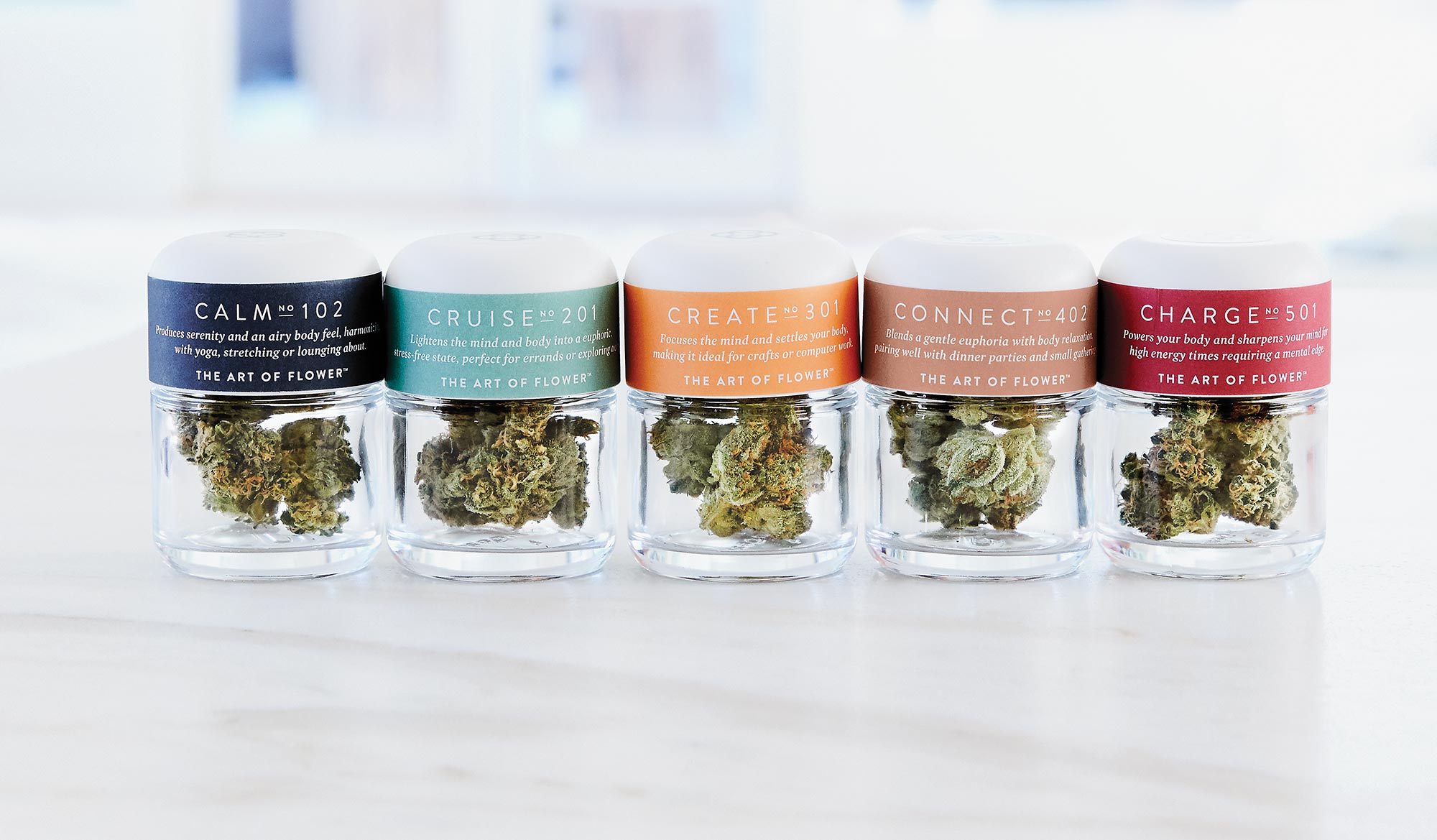 Example jars from each category. Click to see full-sized image.
We keep track of the strain names, cannabinoids, and terpenes on the backend for our growers’ purposes, but the end consumer doesn’t mind all too much about those things.
Philosophy
I wouldn’t say that it’s a green rush. It’s a green marathon.— Adrian Sedlin
What’s your view on the current political climate surrounding cannabis?
 |
 |
 |
Thus, we’re operating in an environment where there’s still a very high perceived risk, but our actual risk is much lower. Cannabis as a product still commands a very healthy risk premium due to that perceived risk. Big Ag doesn’t make nearly as much money selling lettuce; the devil’s lettuce is a different story. And it might seem naive of me, but I don’t think Jeff Sessions will be as big of a threat as he appears to be. The reality is that cannabis is an economic powerhouse waiting to be tapped, and science and ethics are behind cannabis’ medicinal value. By being on the right side of history, we’re shaking up the political climate. I would happily speak to Congress or any elected official about the merits of cannabis. It’s got no calories, it’s less addictive than coffee, it won’t destroy your liver or lungs like alcohol or tobacco, and it has genuine medical benefits with seemingly limitless applications.
What have been your biggest successes?
Any regrets?
What have been some of your biggest challenges?
What current challenges are you facing?
What advice do you have for people entering the industry?

If you’re just entering the industry as a grower or employee, come on in! The water is fine. The industry may have its challenges, but it’s often easier than other industries in many ways. There’s a market nearly everywhere for cannabis. Even bad cannabis can still get sold.
About Adrian and Canndescent

Tell me about your background and how you got started in cannabis.
What’s unique about Canndescent? What’s its competitive advantage?

I’m kidding. Truthfully, this is a business where you have to build the plane while also flying it. There are four main components to a successful cannabis business, and luckily Canndescent was born with three of them, and we’re still working on the fourth:
- First, you need a very strong business execution. This means you need a capital strategy, a marketing plan, a branding plan, good HR and a good corporate culture. If any of this is lacking, the company could fold quickly like a house of cards.
- Second, you need excellent cultivators. This has to deal with the supply chain. If your supply is of low quality and/or inconsistent, then your business will naturally be prone to failure.
- The third portion has to do with real estate and construction. Cannabis production is a land-intensive business, which means you need someone savvy enough to navigate the real estate world, and a smart and dedicated construction crew to make your ideas become a reality. Canndescent has a master welder and master electrician full-time on our staff.
- The final piece of the plane that we’re working on is the science. This means developing standard operating procedures, smooth and efficient processes, R&D on genetics and technology, and more to make sure that you differentiate your work in the grow room from the work that other companies are doing.
And I would say that we’ve accomplished a lot. There’s maybe a few producers in the country that can come close to the level of work we put into the jar. I’m not saying that others won’t come along, or that we’re better than everyone in every aspect. That would be sheer arrogance. It’s because we’re well-capitalized in an era just coming out of prohibition. Having that capital meant we didn’t need to rely upon rubber bands, baling wire, duct tape, and hot glue to bring everything together. We’re working with institutional investment and we’re making it work greatly.
 Do you want to receive the next Grower’s Spotlight as soon as it’s available? Sign up below!
Want to get in touch with Canndescent? You can reach them via the following methods:
- Website: https://www.canndescent.com/
- Phone: 760.205.2087
- Email: media@canndescent.com

