We spoke with Dr. Titus, CEO of Medical Marijuana Inc about CBD products, the future of the industry, and the amateur PGA mini tour. Read on!
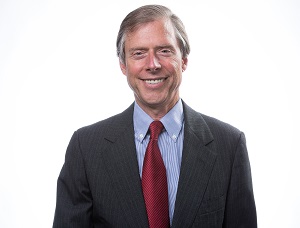
The following is an interview with industry experts. Growers Network does not endorse nor evaluate the claims of our interviewees, nor do they influence our editorial process. We thank our interviewees for their time and effort so we can continue our exclusive Growers Spotlight service.
To skip to any section within this article, click the links below:
Abbreviated Article
Editor’s Note: Growers Network appreciates its readers! If you are limited on time, we are now offering abbreviated versions of our articles. Click below to view.
5-Minute Snapshot
About Dr. Titus
Tell us about your evolution from wall street broker to cannabis CEO. What prompted the change and why cannabis?
I was a bond trader and underwriter on Wall Street from 1979 to 1990 and eventually I’d just had enough of that New York lifestyle and totally switched gears. In college I was a pretty fair golfer and actually played on the PGA ameteur mini tour, and my friend Paul Calloway was the head physical therapist in the PGA tour. I trained under him doing a very interesting type of low level electrical stimulation called microcurrent therapy, and after I earned a degree in physiotherapeutics, I had a wonderful therapy practice in the Carolinas, and this is where a lot of athletes who would be getting this type of therapy on-season with their teams would come in the off season. Many of these people were all using cannabis to help with pain control, with sleep, with inflammation, etc and though they had access to all kinds of pharmaceutical medications, they by and large preferred the natural botanical cannabis products and this got to be such an amazing trend that I decided to attend a couple symposia on medical cannabis and see if there’s any real science to it and I couldn’t believe the huge amount of research on the extracts of the cannabis plants. I was just astounded. When Medical Marijuana Inc started in California in Mar 2009, and when the principles of the company found out I had wall street ties and contacts and asked if I could possibly help raise some venture capital money. Things escalated quite significantly when two years after inception of Medical Marijuana Inc when a new group came in and bought the company from the founders and when they informed me of their plans and what the possibilities were with CBD, I became involved far more significantly.
Medical Marijuana Inc has a lot of different things happening, what aspect of industry are you most passionate about?
We love the international expansion and this has been something our company has been at the forefront of. So for us to have had the opportunity to be first into the country of Brazil to help change the dialogue to help educate the difference between hemp and marijuana, the psychoactive cannabinoids versus the non-Psychoactive ones, the humanitarian aspect for children who really are out of options so to speak. It’s just been phenomenal to be a part of this.
About the Business
Can you tell us about the “International CBD Pipeline” your company is creating?
I’d been working with a consortium of European farmers to grow a hemp crop with a high concentration CBD. From here we had to develop import and export regulations to take this product from European markets and bring it to the US so we could actually work with it. So we developed this supply pipeline and we’re currently importing our CBD from European markets because we had a good experience over there.
What’s the latest in cannabis medicine development? Any new & exciting products on the horizon?
GW Pharmaceuticals just had the wonderful FDA approval of Epidiolex which has had extensive clinical study and research and has shown great benefits. Also, CBD is able to confer a wonderful process called neurogenesis, the regenerating these nerves brain cells and neurological pathways for patients. We really believe this concept of neurogenesis is going to be the next hot topic in neurological medicine.
Thoughts on the Future
More and more jurisdictions are making recreational cannabis legal. Do you think there will still be a place for marketing to a medicinal audience if patients can just walk into a dispensary without a card?
I believe certainly that if you have a choice between doing alcohol and cannabis, you’re better off doing the cannabis. The long term negative consequences of alcohol we’ve seen with encephalopathy, liver transplants, etc. We believe cannabis is over 100 times safer. But getting back to the recreational market we think that even recreational use of cannabis has medicinal benefits. There’s a nice bit of research that’s shown regular cannabis users are two-thirds less likely to develop diabetes. There’s a protective effect on the beta cells of the pancreas. There’s also a neuro-protective benefit for your brain cells. So even though we’re seeing some movement toward the recreational allowance, I certainly think this is an interesting phenomenon.
Having been a Wall Street broker, do you have any advice regarding investing in the cannabis industry? Which areas of the industry to you expect to “take off?” Which areas do you think are overvalued?
It’s been phenomenal to see what’s been going on in the cannabis industry over the past few years. We’ve had tremendous amount of Canadian-licensed producers generating billions of dollars of investor capital to move forward with expansion, growth, and it’s just been incredible. However, investors should probably take a look at some of the relatively undervalued US cannabis assets because the Canadian assets do seem to be slightly overvalued.
What are your predictions for the future of Cannabis IPOs?
I think what we’ve seen with companies such as Tilray and other companies have done fabulously well. Of course many companies in the US are now doing these reverse mergers in Canada, and some of these have been very successful. The investing public is now seeing that the risk is reduced and certainly the investing public are looking at some of the newer companies. I think the investing public is very much looking forward to the next IPO and perhaps the next Tilray.
If you like the abbreviated article, let us know in the survey at the bottom of the article! We’re always interested in hearing your feedback. If you want to read more, you can read the full article below.
About Dr. Titus

Tell us about your evolution from wall street broker to cannabis CEO. What prompted the change and why cannabis?
Medical Marijuana, Inc has a lot of different things happening, what aspect of industry are you most passionate about?
We love the international expansion, and this has been something our company has been at the forefront of. Many of us think about history as something we read in books and we learn to try to pass classes in school, but some of us have lived it and when you’ve seen some of the amazing things that have happened in our industry just the over the past few years, for example, with our company legalizing our product in Brazil (April 2014) as a full on medical prescription product that’s available for the treatment of refractory epilepsy. This is a type of epileptic seizure disorder that is resistant to pharmaceutical intervention, and in many cases our product works fabulously well for these epileptic children. So for us to have had the opportunity to be first into the country of Brazil to help change the dialogue and help educate people on the difference between hemp and marijuana, the psychoactive cannabinoids versus the non-Psychoactive ones, the benefits, the humanitarian aspect for children who really are out of options so to speak. It’s just been phenomenal to be a part of this. One of those stories alone is enough to have a tremendous career on, but obviously we continued along, and Mexico similarly legalized our products as of February 2016. Now here we had to be a little bit creative and innovative, again another one of our company firsts: we had to develop a fully THC-free version of our CBD. We had to pass the regulatory authorities’ guidelines because in Mexico you have a tremendous amount of drug cartel violence, the war on drugs, etc – these really hit home in the Mexican population and the regulatory authorities could see that CBD had tremendous applications despite the THC issues. They really challenged us, telling us if we could develop a fully THC-free version, we could get that approved and passed. So in the year 2015 we worked on this in our laboratory facilities, came up with a formulation toward the end of 2015, and was extensively tested by the government of Mexico. They gave the thumbs up as of February 2016, and we currently service a great number of patients in the Mexican markets where it’s now available by doctor’s prescription. We’re very much looking forward to the new Mexican President. He took office official in December 2018 and he’s much more progressive in his stance toward cannabis. We think this is going to have great implications for CBD in that country. Those are a couple of the firsts we were able to accomplish. More recently we’ve seen tremendous things happening in the European markets. We’ve launched one of our divisions, our Kannaway multi level marketing sales division over in the European Markets Dec 1st 2017, and the growth in the European markets has been phenomenal. I was just over in Prague in the Czech Republic a week and a half ago for a grand opening event. It was incredibly well attended about 2000 brand ambassadors, a huge number of medical doctors attending, and the results that some of the patients were reporting the product improved their overall levels of health and wellness are just absolutely astounding. I’ve been so happy to be a part of this. It was perhaps the culmination of my career, and we’re certainly very excited to announce some of the great things going on in the European markets over the coming months and years. I think that’s going to add significantly to our company’s growth and our bottom line for our shareholders.
About the Business

Can you tell us about the “International CBD Pipeline” your company is creating?
What’s the latest in cannabis medicine development? Any new & exciting products on the horizon?
Thoughts on the Future

More and more jurisdictions are making recreational cannabis legal. Do you think there will still be a place for marketing to a medicinal audience if patients can just walk into a dispensary without a card?
Having been a Wall Street broker, do you have any advice regarding investing in the cannabis industry? Which areas of the industry to you expect to “take off?” Which areas do you think are overvalued?
It’s been phenomenal to see what’s been going on in the cannabis industry over the past few years. We’ve had tremendous amount of Canadian-licensed producers generating billions of dollars of investor capital to move forward with expansion, and it’s just been incredible. Many of these have been very successful stock stories, the most terrific one being Tilray, which came with a NASDAQ listing of an IPO a few months ago at 17 dollars a share, and it did skyrocket as high as 300 dollars a share. Things seem to be stabilizing in the low 100s, and it’s a tremendous story. For early investors it’s an absolute home run.
I’m excited about future because many other countries we believe will legalize cannabis and there will be Tilrays in these other countries as well. Certainly the industry is ripe for growth, and when it’s fully developed, the cannabis industry will employ well over one million individuals, and we think it’s going to add percentage points to our national GDP. We do see some disruptions though, disruption in the pharmaceutical industry, disruption in the alcohol and tobacco industries, and many of the alcohol manufactures are seeing this. In Colorado, beer sales are down about 15% since the legalization of Cannabis, and now many of the alcohol manufacturers are partnering with Canadian licensed producers to produce a THC form of non-alcoholic beer that will still give you a bit of a buzz because of the THC. We’ve seen Constellation Brands, a publicly traded company investing 4 billion us dollars in the Canopy First corporation, just to produce these future THC alcoholic beverages. Of course there are many other big New York Stock Exchange companies such as Scott’s Miracle Grow, very much involved in soil nutrients, grow lights, etc.
For investors, these Canadian assets, many of these companies are trading at multi-billion dollar market caps, and it has boded very well for the future and stability. However, when you’ve got a multi-billion dollar market cap, it’s hard to grow your company at any kind of significant rate like can be shown with some of these smaller start up companies. These smaller businesses often show an accelerated growth curve and an increase in sales of 50-100% over a year isn’t uncommon. Our company is relatively small in terms of market cap, now under 250 million, but our revenues from this time last year are already over 100% and we haven’t even announced our 4th quarter yet . Investors should probably take a look at some of the relatively undervalued US cannabis assets because the Canadian assets do seem to be slightly overvalued, and we’re already seeing many Canadian licensed producers now looking to acquire some relatively undervalued US assets. So I’d encourage investors to take a look at some of these emerging companies here in the US. Also, the pharmaceutical side has great promise, and there are many young startup companies looking at the cannabinoid space in terms of pharmaceutical investment. I think these are great investment opportunities as well.
What are your predictions for the future of Cannabis IPOs?
 Do you want to receive the next Grower’s Spotlight as soon as it’s available? Sign up below!
Want to get in touch with Medical Marijuana Inc?
You can reach them via the following methods:
- Website: Medical Marijuana Inc
- Phone: (844) 710-6562